
If you're in business, you need a business card. That much is obvious. But how many times have you stuffed a flimsy, generic card into your wallet only to bin it a week later? As an experienced printer and graphic designer, I can tell you that the true goal of a business card isn't just to exchange contact information; it's to create a memorable artefact that guarantees the recipient holds onto your details.
Your business card printing project shouldn't be treated as a cheap necessity, but as a strategic investment in portable marketing. It's the only advertising material that almost guarantees one-to-one delivery. To succeed, you need to combine a thoughtful design business card printing approach with exceptional materials.
Strategy 1: Clarity Over Clutter (The Design Pitfall)
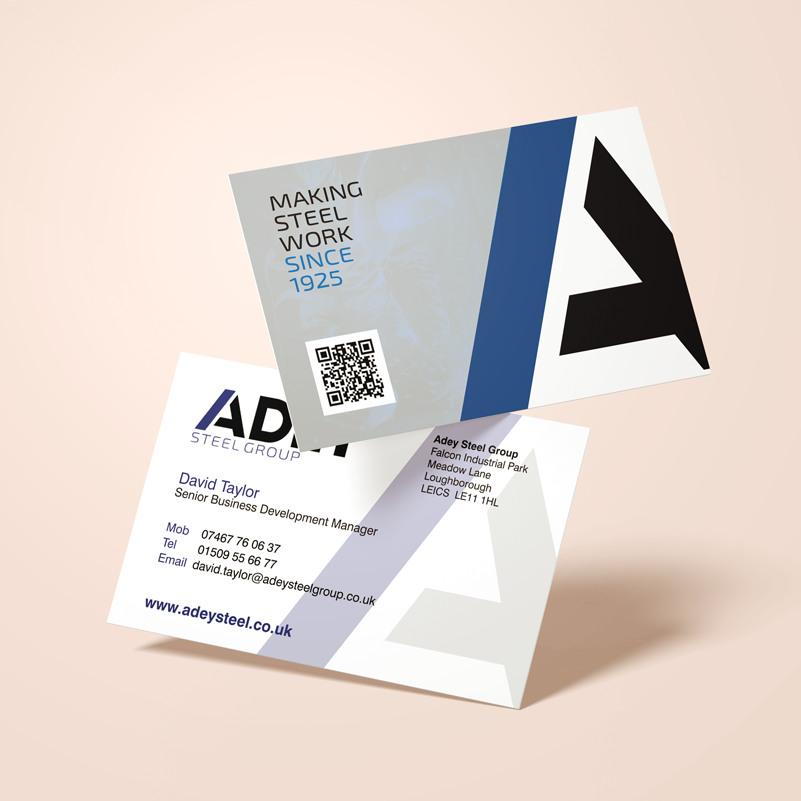
The biggest mistake I see in printing business card design is trying to squeeze too much onto the canvas. A card is not a brochure. It needs to pass the "five-second rule"—can someone glance at your card and immediately know who you are and what you do?
The solution is to embrace white space. This is where a strong business card print design truly shines. Focus on clarity: your name, your primary contact number, and your logo. If you are struggling for space, use the reverse side! Dedicate the front to a simple, bold logo and your name, and the back to contact details. This is an elegant way to avoid a cluttered look while still ensuring all necessary information is present. After all, if you’re just printing a card, you might as well use all of it.
I had a client who sold bespoke lighting fixtures. His initial design was dark, busy, and the text was hard to read. We switched to a super-clean, minimalist front featuring just his unique company name. On the back, we added a small, high-quality card photo printing of his most impressive fixture. He found that clients held the card up, turned it over repeatedly to look at the photo, and were far more likely to remember his work.
Strategy 2: Material as Message (The Tangible Experience)
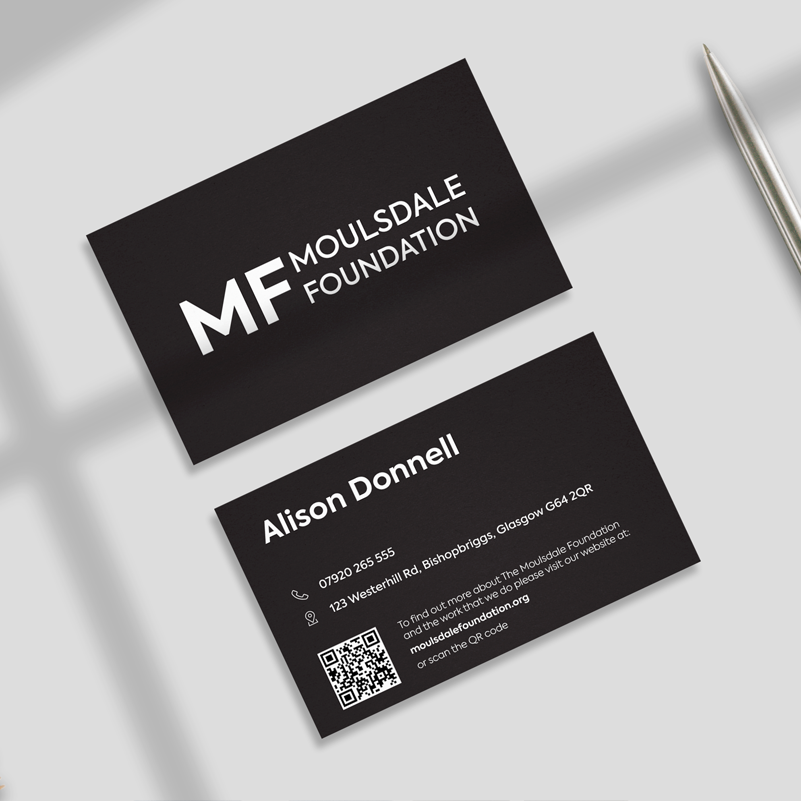
The material you choose is the silent messenger of your brand’s quality. When setting up for custom card printing, we always discuss GSM (grams per square metre). I recommend nothing less than 350gsm. Anything less, and the card bends easily, instantly cheapening the impression.
Your choice of print on card paper also defines your brand personality. An uncoated stock feels luxurious and natural, great for ethical or creative brands. A silk or matte finish offers a smooth, professional feel.
To truly differentiate your card, consider special finishes:
-
Foil Blocking: Adds a metallic shine (gold, silver, copper) to your logo or text.
-
Spot UV: Applies a glossy varnish only to specific elements, creating a striking contrast on a matte background.
These options for printing to card show that you’ve gone the extra mile, turning a simple exchange into a memorable sensory moment.
Strategy 3: Technical Perfection (Getting Print Ready)
Even the best design can be ruined if the file isn’t set up correctly for the printer. As a printer, I can’t stress this enough. When preparing your card for printing, always work in a vector format for your logo (which ensures infinite scalability) and raster format (300dpi) for any photos.
Crucially, you must account for ‘bleed’ and ‘safe zones.’ The bleed ensures the colour extends right to the edge after cutting, and the safe zone ensures no text or logo is placed too close to the edge where it might be trimmed off. Getting the paper for printing cards ready involves precise technical specifications that ensure a sharp, professional output.
Expanding Your Print Portfolio
Remember, consistency across all your printed assets strengthens your brand image. If you are ordering flyer and business card printing together, ensure the colours and fonts are perfectly matched. If you run events, matching the style of your invitation card printing and place card printing to your business card reinforces your professionalism.
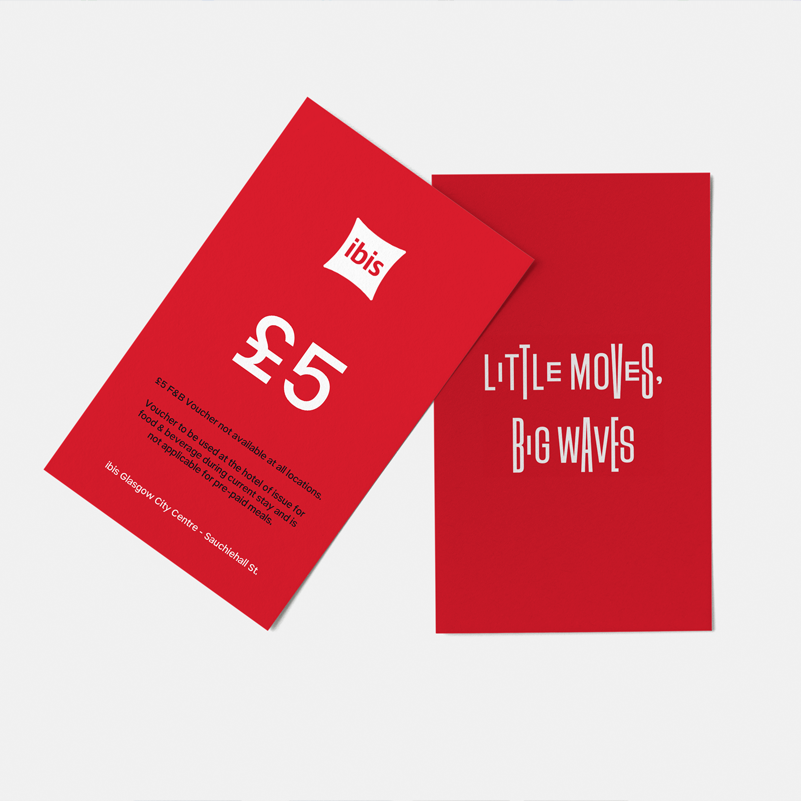
Businesses that use loyalty programs will find that quality gift card printing (a nice, durable print gift card) looks far better than a hastily printed generic version. Even small elements like a place card print for an event or a small poster card printing run for a promotion should adhere to your core brand aesthetic. If all your printed materials look connected, your brand looks unified and trustworthy.
Recently, a small artisanal bakery came to us needing both a small banner for their shop and business cards. We used the same heavyweight, uncoated stock for their business cards, their loyalty cards (gift card printing), and their small paper banner printing. The consistency looked expensive and bespoke, and the owner said customers frequently commented on the high quality of all their printed materials.
Making an Investment, Not an Expense
Your choice of card printing partner should be based on quality and expertise, not just the lowest price. A well-designed, high-quality business card is an investment that pays dividends every time you meet a potential client. By understanding the strategies of design hierarchy, material choice, and technical setup, you ensure that your card won't end up in the bin. You'll be handing over a premium representation of your business every single time.
FREQUENTLY ASKED QUESTIONS (FAQ)
Q:1: Why is a 350gsm business card considered better than a 250gsm card?
A 350gsm (grams per square metre) card is significantly thicker and heavier than a 250gsm card. This increased weight translates to greater perceived quality, durability, and professionalism, preventing the card from feeling flimsy or easily creased.
Q:2: What is the purpose of bleed and safe zones in business card design?
Bleed is an extra margin of colour or image extending past the trim line (usually 3mm) to ensure there are no white edges when the card is cut. The safe zone is an inner margin where no essential text or logos should be placed, ensuring they aren't accidentally cut off during trimming.
Q:3: Can I print a square business card, or must it be rectangular?
While the standard UK size (85mm x 55mm) is rectangular, you can absolutely opt for a square card or another unique shape using custom card printing (often called die-cutting). However, unique shapes may cost more and require specialist printing.
Q:4: Are metallic foils worth the extra cost for business card printing?
For businesses in luxury goods, high-end services, or creative industries, metallic foils are often worth the cost. They create a premium, tactile, and highly memorable finish that instantly differentiates your card from standard print on card paper.
Q:5: What is the best way to handle card photo printing for professional headshots?
If you must include a headshot, ensure the photograph is professionally taken, high resolution (300dpi), and cropped effectively. Avoid using the photo as a busy background; instead, place it cleanly on one side, perhaps framed by a border.
Q:6: How can I ensure my brand's colour matches on my finished card?
To ensure accurate colour matching, always provide your printer with CMYK colour values, not RGB. If your brand has specific colours (e.g., a specific shade of blue), ask the printer to use a spot colour (Pantone) reference, as this is the most accurate method.
Posted by By Jenny on 4th Dec 2025