

In the world of high-stakes networking, your business card is often the only thing left behind once the conversation ends. As someone who has spent years behind both the design desk and the printing press, I can tell you that a card isn't just a carrier for your phone number—it’s a physical piece of your brand’s reputation. Whether you are interested in standard card printing or a more bespoke custom card printing project, getting the details right is the difference between being remembered and being recycled.

Supplying Your Own Artwork? Let’s Get Technical
Many of the businesses we work with prefer to supply their own files. If you are taking the "DIY" route for your business card printing design, there are a few technical hurdles you need to clear to ensure the finished product looks sharp.
First, let’s talk about "Bleed." When you are printing to card, the blades that cut the paper are incredibly fast. To avoid having a tiny, messy white line at the edge of your card, you must extend your background colours 3mm past the actual edge. Second, watch your resolution. If you are doing card photo printing, your images must be 300dpi.
I remember a local consultant who sent over a file he’d made in a basic word processor. It looked fine on his monitor, but because it lacked bleed and was low-resolution, the final print looked fuzzy and lopsided. We had to pause the job and fix it for him—save yourself the headache and double-check your margins!
Let Us Take the Reins: Professional Design Services
If the talk of "bleed" and "CMYK colour profiles" makes your head spin, remember that we are here to help. We offer a full design business card printing service to take the stress off your plate. Sometimes, "good enough" isn't quite good enough when you’re trying to land a five-figure contract. Our team understands the nuances of printing business card design, ensuring that your logo is crisp, your fonts are legible, and the information hierarchy leads the eye exactly where it needs to go.
The Feel of the Paper
One of the most overlooked aspects of printing a card is the tactile experience. When someone holds your card, their brain is subconsciously measuring your brand's stability by the weight of the paper. We always recommend a minimum of 400gsm for a truly professional feel. Whether you want a silk finish or a textured print on card paper, the material is just as important as the pixels.
Choosing the right paper for printing cards is a sensory decision. I once handed out two different versions of my own card at a trade show—one on standard card printing paper and one on a luxury 450gsm "soft-touch" laminate. The people who received the luxury card spent nearly four times longer looking at it and actually commented on the feel. That’s the power of premium card for printing.

A Cohesive Brand Identity
Your business identity doesn't stop at the card. We often help clients with flyer and business card printing as a package to ensure the colours match across the board. If you are hosting a corporate gala, you’ll want your invitation card printing and place card printing to use the same fonts and paper stock as your business cards.
From gift card printing for your best customers to a high-impact poster card printing run for your storefront, consistency is king. We even handle greeting card custom printing for those businesses that want to send a personal, branded "thank you" to their clients.
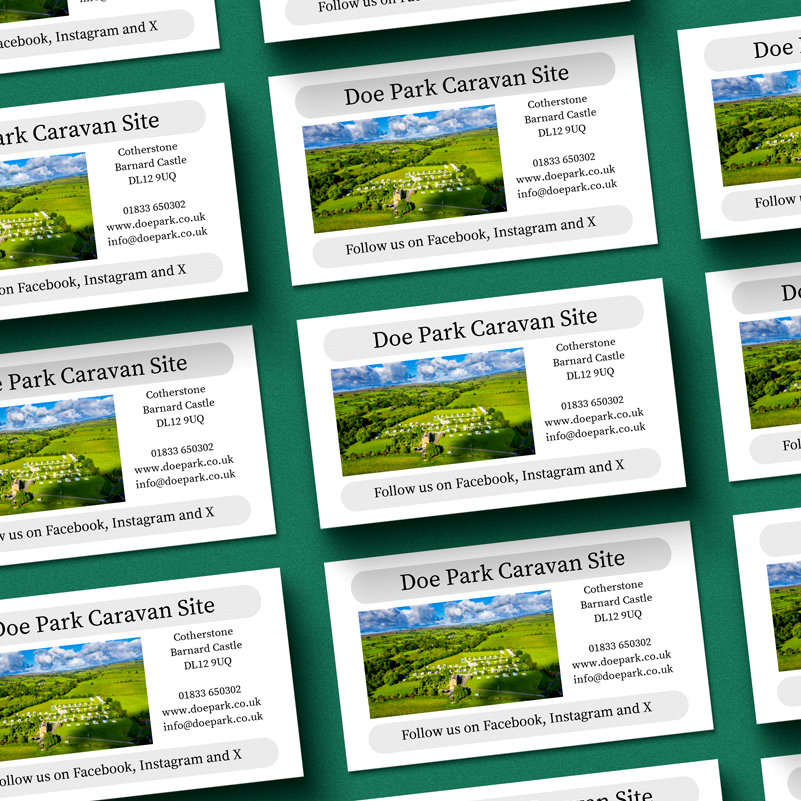
Whether you are supplying your own printing invitation cards file or asking us to handle your design business card printing from scratch, the goal is the same: a final product that you are proud to hand over. Don't settle for flimsy, poorly designed cards when you can have a "handshake in print" that truly represents your hard work.
FREQUENTLY ASKED QUESTIONS (FAQ)
Q:1: Can I supply my artwork as a Word document or a Powerpoint slide?
While we can sometimes convert these, they are not ideal for professional card printing. These programmes often compress images and use "RGB" colours which can look very different once they are moved to our industrial presses. For the best result, we recommend a high-resolution PDF with 3mm bleed.
Q:2: What is the benefit of having you design my cards instead of using a template?
A template is used by thousands of other businesses. When you choose our design business card printing service, we create something unique to your brand. We also ensure that the file is technically perfect for our machines, avoiding issues with blurry text or cut-off logos.
Q:3: What is the standard size for a business card in the UK?
The standard UK business card size is 85mm x 55mm. When you are preparing your card for printing, make sure your canvas is set to these dimensions, plus an extra 3mm on each side for the bleed.
Q:4: Do you offer other types of business stationery?
Yes, we provide a full range of services including invitation cards printing, gift card print options, and business card and flyer printing bundles. We can also assist with paper banner printing and custom greeting card printing to keep your branding consistent.
Q:5: How do I know if my photo is high enough quality for card photo printing?
A good rule of thumb is to look at the file size. If it's a tiny file from a website, it will likely look "blocky" when printed. For professional results, images should be 300dpi at the actual size they will appear on the card. If you're unsure, our design team can check your images for you.
Q:6: What is "gsm" and why does it matter for my business cards?
GSM stands for "Grams per Square Metre" and refers to the weight of the card printing paper. A higher GSM means a thicker, sturdier card. For businesses, we usually recommend 400gsm or 450gsm to ensure the card feels substantial and doesn't get easily creased in a wallet.
Posted by By Jenny on 14th Jan 2026