
The Underrated Power of 365-Day Visibility
In corporate marketing, securing a permanent spot on your client's desk is the holy grail. While digital ads blink past in seconds and promotional emails are archived with a single click, a beautifully produced physical calendar stays directly in front of key decision-makers every single day of the year.
As experienced design and print professionals, we often remind businesses that high-impact marketing isn't about shouting louder; it's about being present consistently. Bespoke printed calendars deliver continuous, passive exposure for twelve full months, offering an extraordinary return on investment that few other tangible items can match.
Why Corporate Calendars Work When Other Gifts Fail
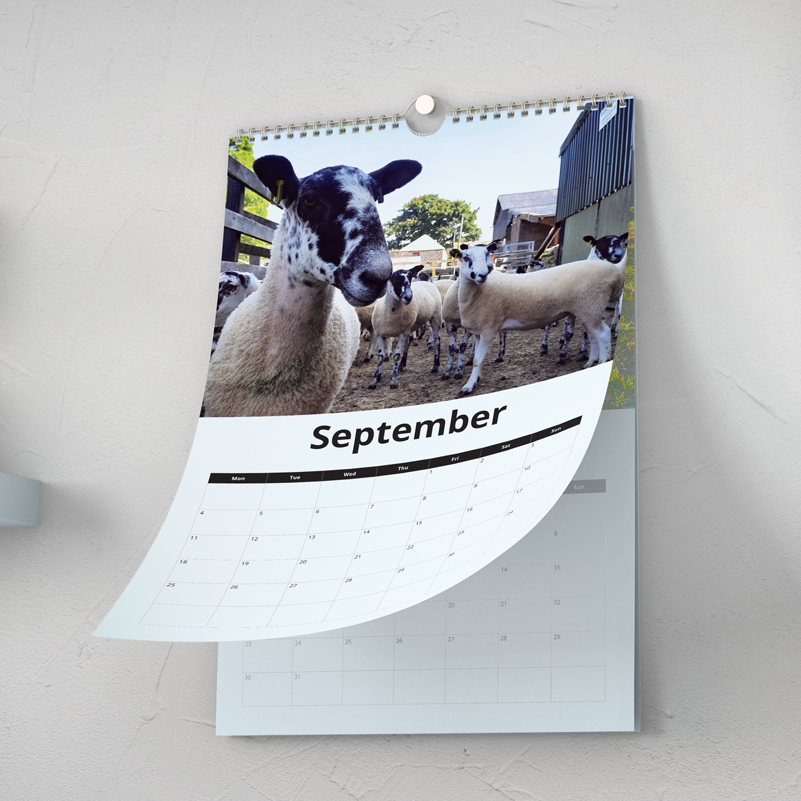
Many corporate giveaways—like plastic pens, stress balls, or branded USB drives—often end up buried in a drawer or discarded within weeks. A calendar, on the other hand, provides immediate functional value. Everyone needs to check dates, plan project deadlines, and note down key events.
By supplying your clients with a high-quality calendar, you are providing a genuine utility. It transitions your brand from a vendor seeking attention to a helpful partner integrated into their daily workflow. Every time a client glances across their office to check a date, your logo, brand colours, and contact details are right there reinforcing your presence.
A couple of years back, a commercial logistics client came to us asking for a marketing tool that wouldn't end up in the bin by mid-January. We designed a sleek, desktop tent calendar featuring high-end photography of their fleet alongside useful international shipping deadline reminders. By June, their sales director phoned to say three major clients had specifically referenced the calendar sitting on their desks when placing new orders. That single print run delivered a return on investment that outpaced their entire digital ad budget for that quarter.
Choosing the Right Format: Desk vs Wall Calendars
Selecting the best format for your target audience is critical to ensuring your calendar actually gets used.
-
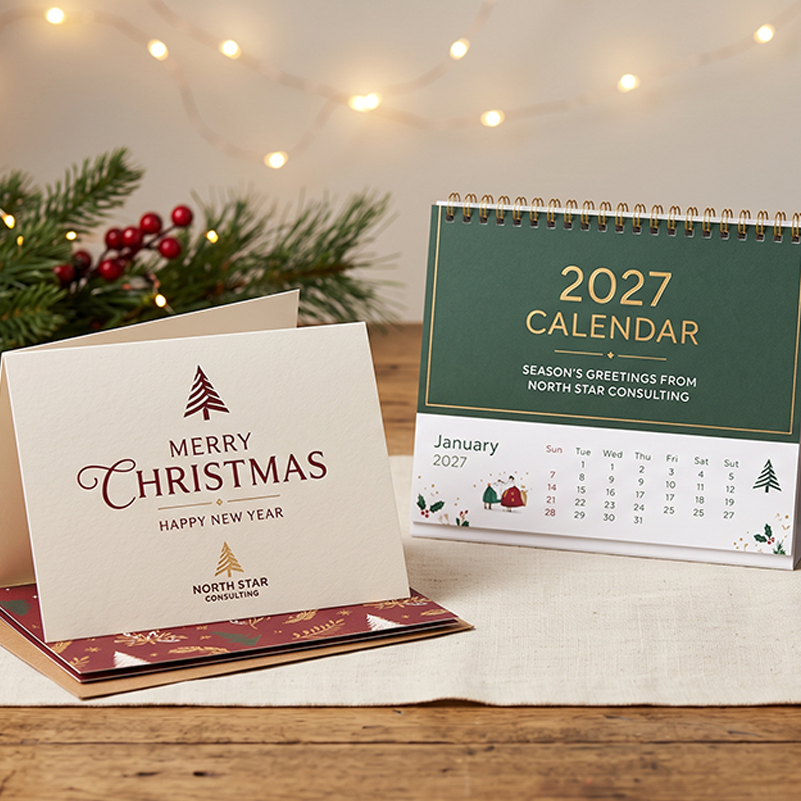
Desktop Tent Calendars: Ideal for office-based professionals with limited wall space. Compact, self-standing desk calendars stay right next to computer monitors, guaranteeing maximum daily impressions.
-
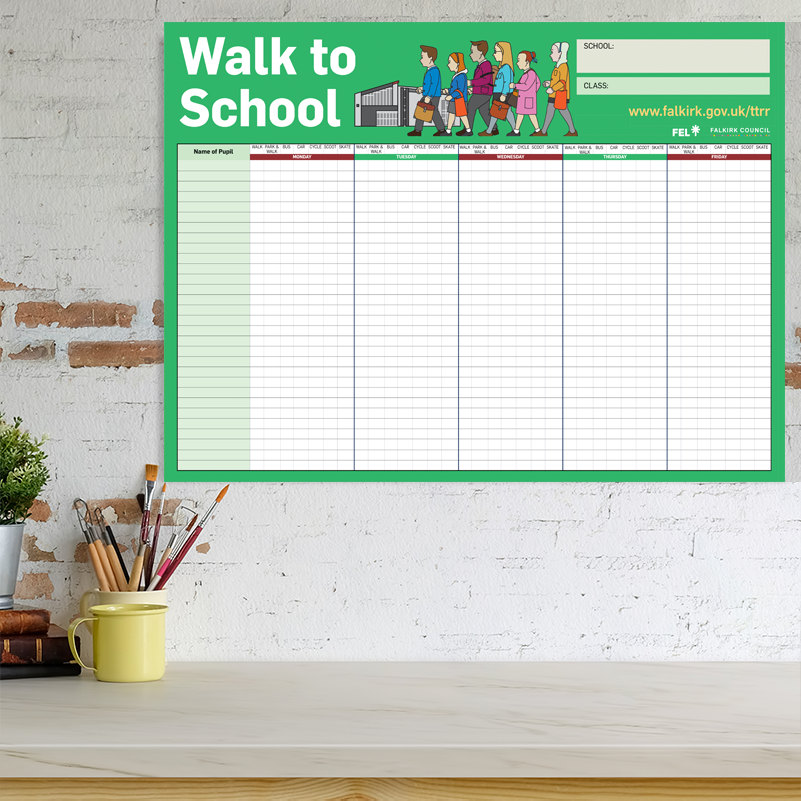
Wire-O Bound Wall Calendars: Perfect for open-plan offices, reception areas, or workshops. A hanging wall calendar provides larger visual real estate for striking imagery and readable date grids.
-
Year Planners: Highly practical for managers and project planners who need to see the entire year at a glance. poster-style planners offer huge surface area for bold company branding.
Collaborating with an experienced graphic designer near me ensures you pick a size, format, and grid layout tailored to how your clients work.
Design Excellence: Keeping It Practical and Beautiful
The biggest mistake businesses make with promotional calendars is over-branding. If every page looks like a hard-sell advertisement, clients won't want it on display.
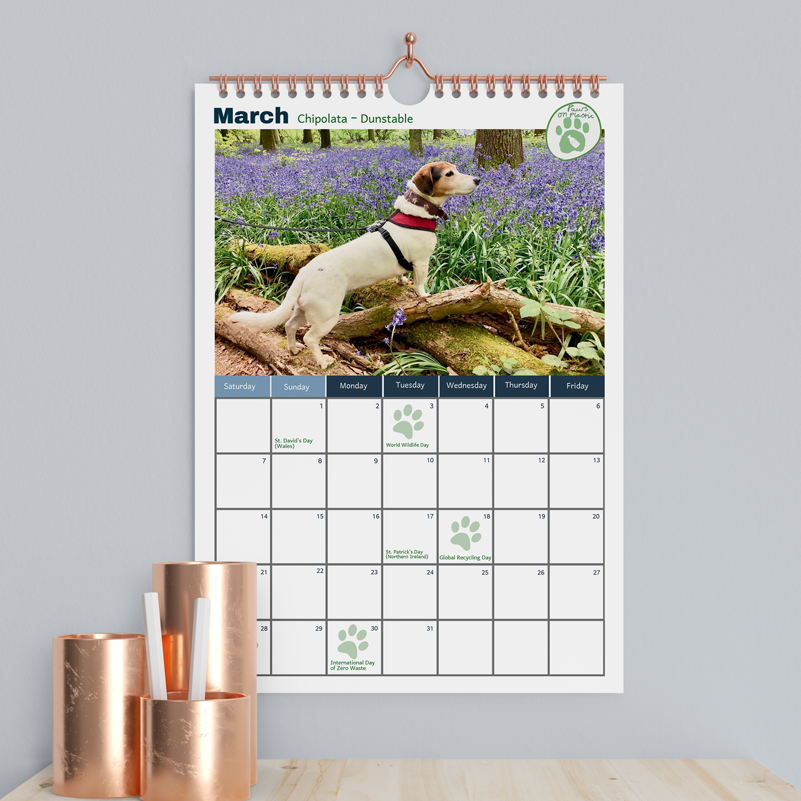
Working with an Aberdeen graphic design specialist allows you to strike the perfect balance between aesthetics and utility. Focus on visually engaging elements: high-resolution photography, bespoke illustrations, or seasonal motifs that reflect your industry. Keep the branding clean and sophisticated—a subtle logo, website URL, and phone number on each page header or footer is far more effective than giant corporate banners.
You can also add custom value by pre-printing key industry dates, trade show schedules, or national holidays directly into the date grid, turning your calendar into an indispensable sector tool.
Print Specifications, Paper Stocks, and Finishes
The physical quality of your calendar reflects the quality of your services. Flimsy paper and poor binding will lead to curling pages and a damaged brand image before spring even arrives.
I remember reviewing a sample sent in by a company that tried to save pennies by printing their annual calendars on thin 100gsm paper with cheap spiral wire. By March, the pages were curling up like autumn leaves and the card stand had completely collapsed on the client's desk. It sent entirely the wrong message about their business. When we reprinted the project using a heavy 350gsm silk cover, 200gsm inner pages, and a sturdy board backer, the difference was night and day. Quality print doesn't just look better—it lasts.
For professional calendar printing, consider these technical guidelines:
-
Paper Weight: Use at least 170gsm to 250gsm for inner pages to prevent ink show-through, paired with a heavy 350gsm cover.
-
Binding: Sturdy twin-loop Wire-O binding with a integrated thumb-cut hanger ensures smooth page turning and easy wall mounting.
-
Finishes: A matt or soft-touch laminate on the cover protects against wear, while selective spot UV varnish or foil stamping can highlight key visual details.
Timing Your Calendar Campaign
Timing is everything when distributing annual print items. Aim to have your calendars designed, printed, and delivered by late October or early November. Being the first calendar to arrive on a client's desk guarantees it secures prime real estate before competitors even send their Christmas mailings out.
FREQUENTLY ASKED QUESTIONS (FAQ)
Q1: Why are printed calendars still effective in a digital business environment?
Printed calendars offer immediate, physical access to dates without needing to open software apps or switch computer tabs. They provide continuous, 365-day brand visibility in a client's physical workspace, creating repeated visual impressions that digital ads cannot match.
Q2: When should I start planning my corporate bespoke calendar printing?
You should begin planning your calendar design in late August or September. Starting early allows ample time for custom concept creation, image sourcing, high-quality printing, and early distribution in October or November before client offices close for the holidays.
Q3: Should I choose desk calendars or wall calendars for my clients?
It depends on your clients' working environments. Desk calendars are best for individual office workers and corporate executives who spend their days at a computer station. Wall calendars and planners are better suited for team environments, workshops, reception areas, and shared project spaces.
Q4: How can an Aberdeen graphic design specialist help make my calendar unique?
A local graphic design expert will create a custom grid layout and visual theme tailored specifically to your audience. Rather than using generic templates, they can incorporate bespoke photography, custom typography, brand colours, and relevant industry dates to produce a polished, high-end final product.
Q5: What paper weight is best for high-quality printed calendars?
We recommend using at least 170gsm to 250gsm paper for the internal monthly pages to prevent page curling and ink bleed. The front cover and desk calendar standing bases should be printed on a substantial 350gsm to 400gsm card stock for maximum stability and durability throughout the year.
Posted by By Jenny on 23rd Sep 2026